2026-10-26 · Mike Harlan
Portland Dumpster Rental Rules for Yard Waste and Storm Debris
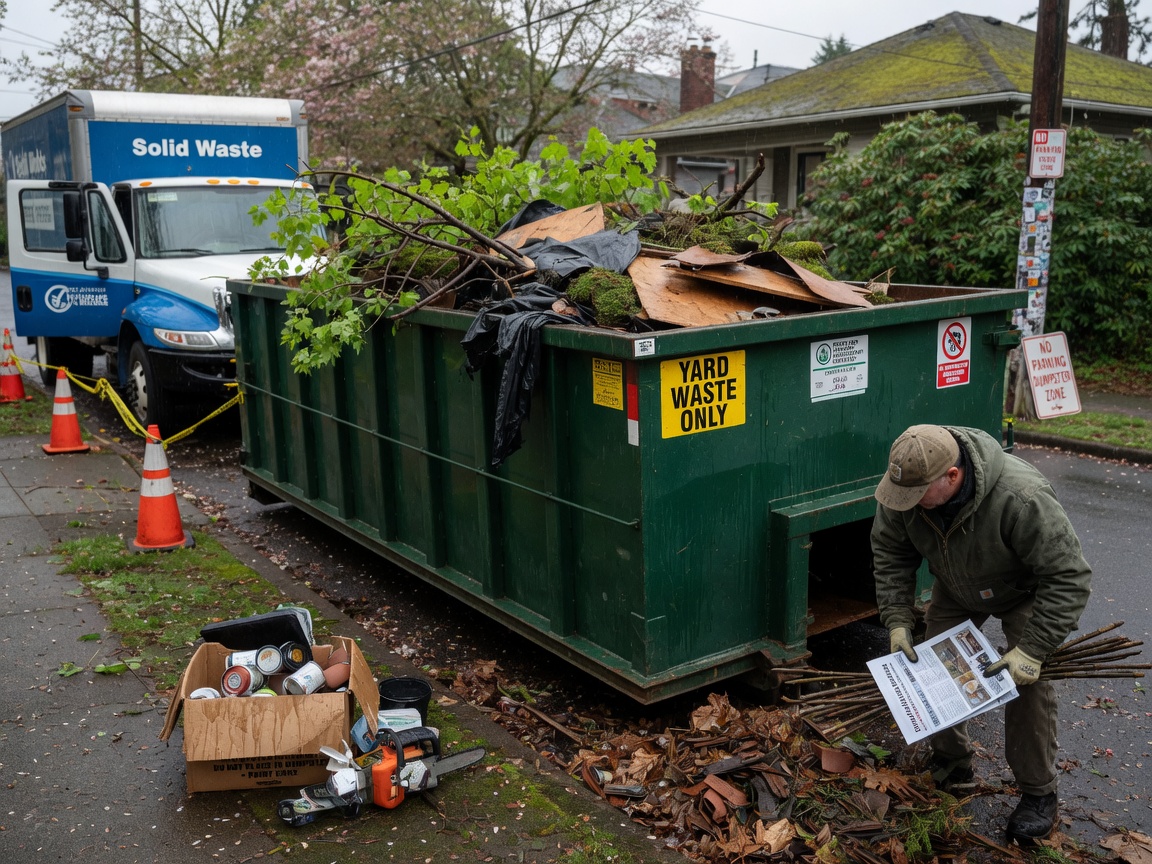
Portland dumpster rental for yard waste and storm debris requires separating organic materials from construction waste and confirming load limits with the hauler before delivery to sites in Multnomah County. Wet winters increase fallen branches and saturated leaves from older housing stock in neighborhoods such as Woodstock and Division-Richmond, while occasional heat waves dry out summer yard trimmings faster and reduce volume. These patterns change how loads pack and how quickly a container fills during peak storm periods.
Weather Patterns That Affect Debris Volume
Portland's mild wet winters produce repeated wind and rain events that knock down limbs from mature trees lining streets in Laurelhurst and Nob Hill. Warm dry summers with occasional heat waves instead create brittle yard waste that breaks into smaller pieces during collection from properties in the Alberta Arts District or Mississippi District. Operators see loads from Sellwood-Moreland shift from heavy wet organics in January to lighter dry clippings in July, which changes how many 10-yard or 20-yard containers are needed for the same property size. Terrain in hilly sections near Washington Park adds runoff that mixes soil into storm debris, requiring extra screening before the dumpster is hauled away.
Separation Rules for Yard Waste Loads
Yard waste must stay free of treated lumber, plastics, and painted materials when placed in a dumpster rental so the material can be processed at local composting facilities. Homeowners in the Pearl District and Hawthorne often generate mixed loads from garden cleanups that include both leaves and small fence sections, which forces an extra sort step on site. Concrete and asphalt from hardscaping projects around Pioneer Courthouse Square or the Oregon Museum of Science and Industry must travel in a separate container to prevent contamination fees. Checking the load at the curb before the truck arrives prevents rejected hauls on busy routes serving Irvington and Woodstock.
Storm Debris Handling After Wet Seasons
Storm debris from Multnomah County wind events frequently includes larger branches that exceed standard 4-foot length limits and must be cut on site before loading. Properties near Powell's City of Books or the Portland Japanese Garden see higher volumes of saturated leaves that add weight and require smaller partial loads to stay under axle limits. Same day dumpster rental helps after sudden storms when debris blocks sidewalks in Division-Richmond and Nob Hill. Nearby cities such as Beaverton, Gresham, Hillsboro, and Oregon City follow similar separation practices but add travel fees that increase total cost for cross-county hauls.
Practical Steps Before Booking a Container
Measure the expected volume from your yard in cubic yards and request a 10-yard or 15-yard unit first to avoid over-ordering for typical Portland lots. Clear a level 10-foot by 20-foot spot on the driveway or street in front of older homes common in Sellwood-Moreland so the roll-off sits flat and the door opens fully. Schedule pickup before the next rain to keep wet material from freezing or compacting unevenly during winter months. Review the related article on what affects dumpster rental prices in Portland Oregon for current factors that influence rates on debris loads.